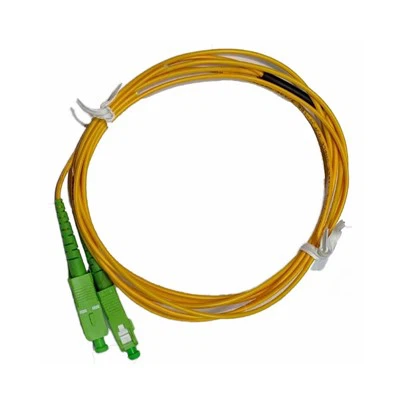


LC to LC duplex fiber optic jumpers are ideal for supporting high-speed telecommunication network fiber applications. Every termination is conducted through a rigorous parameter test to ensure the highest network performance. LC to LC duplex fiber optic jumpers are ideal for supporting fiber optic applications in high-speed telecommunications networks. Manufactured and tested to meet ICE, ISO, and ROHS industry standards, HTGD is available in OM1, OM2, OM3, OM4, OM5, OS1 and OS2 fiber types, with LC connectors, and in a variety of cable diameters and materials. LC connectors have a push-pull connection and have a compact design. It is a single-channel connector for single-mode and multi-mode fibers. LC to LC duplex fiber optic jumpers are widely used in data centers, enterprises, telecom network applications and other areas where rapid infrastructure deployment is required, such as main wiring zones, horizontal wiring zones and regional wiring zones.
Fiber optic communication system, high-speed and high-capacity fiber transmission system
High-density connections, SFP and SFP+ transceivers, XFP transceivers
{{0}}.90,1.6,2.0,3.0mm cable for high density splicing applications.
Almost 100% power transmission while mated in communication system
RoHS 2.0 Compliant
|
|
|
|
|||
|
0.90,1.6,2.0,3.0 |
|||||
|
- |
|||||
|
- |
SM:G652,G657 |
MM:OM1,OM2,OM3,OM4,OM5 |
|||
|
1310/1550 |
850/1300 |
||||
|
- |
|||||
|
Less than or equal to 0.30 |
Less than or equal to 0.25 |
||||
|
Greater than or equal to 50 |
Greater than or equal to 60 |
Greater than or equal to 20 |
|||
|
(3D) |
|||||
|
μm |
|||||
|
1000 |
|||||
|
-20 ~ +80 |
|||||
|
-15 ~ +60 |
|||||





Clibeanna Te: